This Tiny Cabin Overlooking the Cape Town Surf Was Assembled in Under 3 Weeks
ByLydia Geisel,Photography byWarren Heath/Bureaux,Styling bySven Alberding
PublishedMay 5, 2023 1:30 AM EDT
We may earn revenue from the products available on this page and participate in affiliate programs.
Sign Up for Domino's Newsletter
By signing up, you confirm you are 16+, will receive newsletters and promotional content and agree to ourTerms of Useand acknowledge the data practices in ourPrivacy Policy. You may unsubscribe at any time.
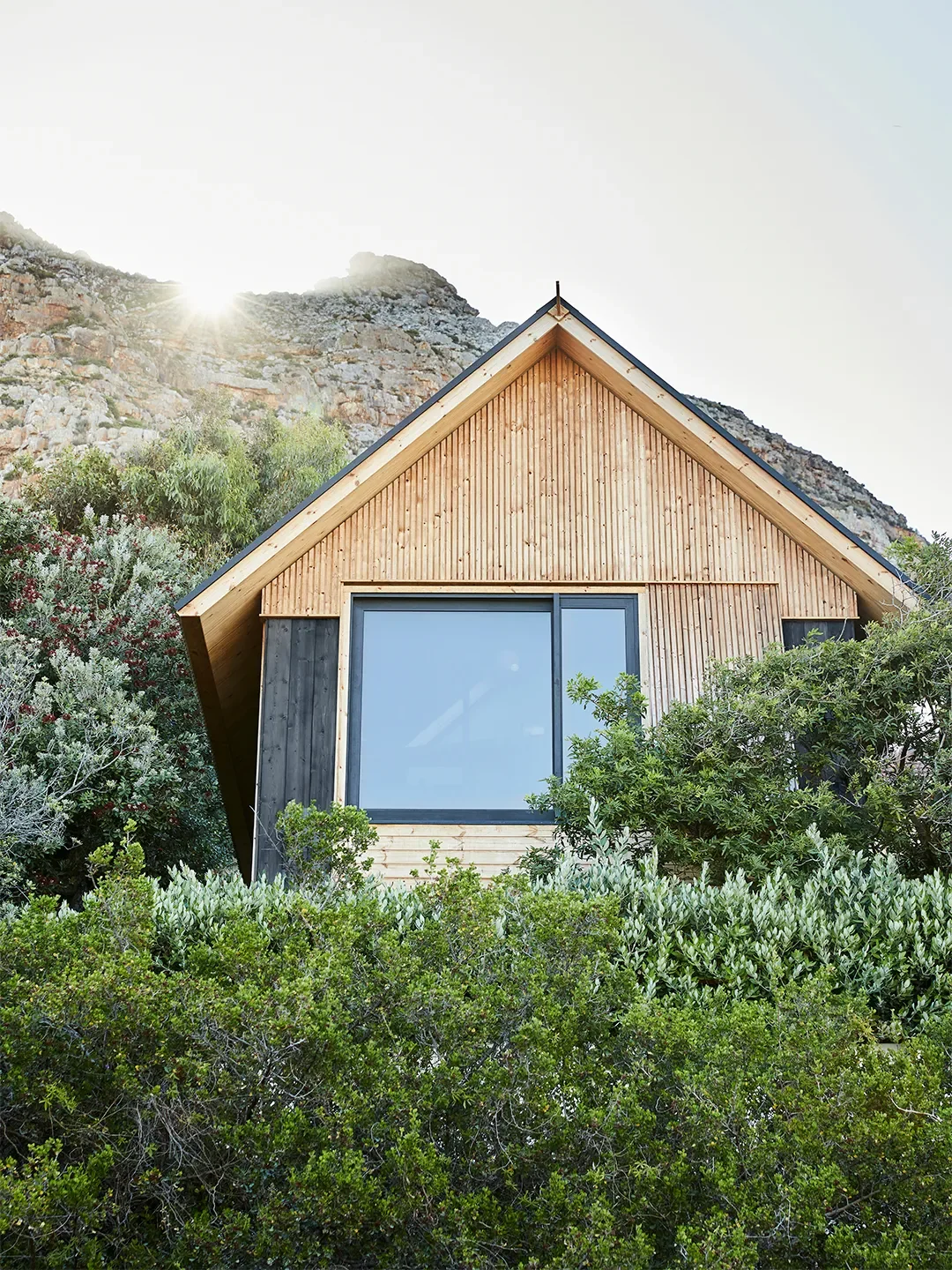
Thirty steps from architect Alexander McGee's South Africa home, at the bottom of a rocky hillside surrounded by cypress trees and fragrant buchus, sits a small wood cabin tucked into the scrub. It overlooks Muizenberg, one of Cape Town's best-known surf spots—a view you can soak in from the roughly 390-square-foot interior, thanks to a generous window seat. Solar panels top the roof, powering both the cabin and main house. But you won't find gutters—McGee wanted to watch rain run off the roof from every angle. "We're spoiled in South Africa with some of the most naturally beautiful sites found anywhere in the world," says McGee. "As an architect, I view it as my responsibility to demonstrate an alternate solution to settling in these environments."
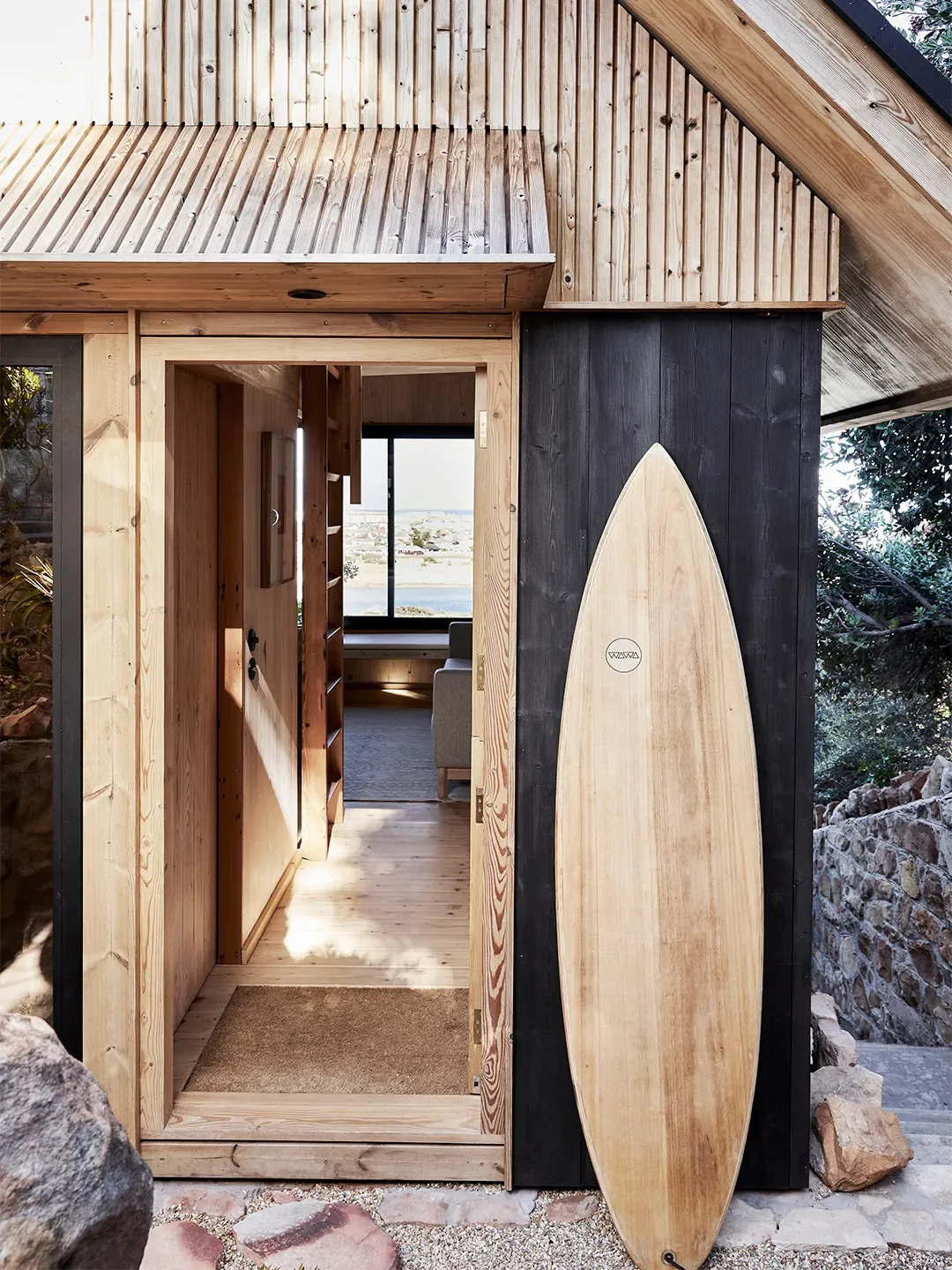
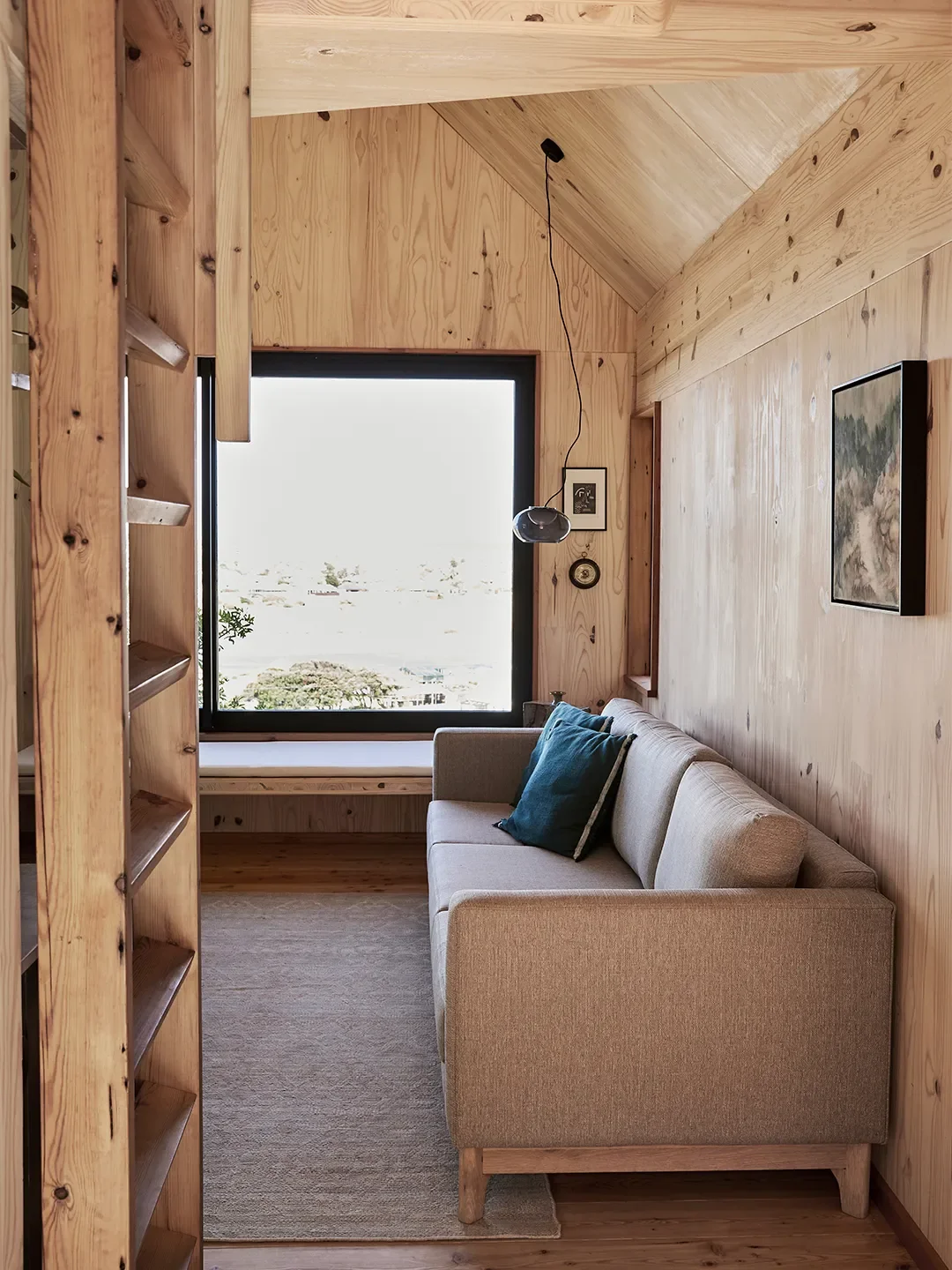
Initially, the cabin was an experiment: How well and how fast could he craft a home in a remote spot? The key was building the whole thing off-site in a warehouse, where McGee and his team could tinker with details and make tweaks before dismantling and reassembling it on his property. The materials were everything—and I mean everything.
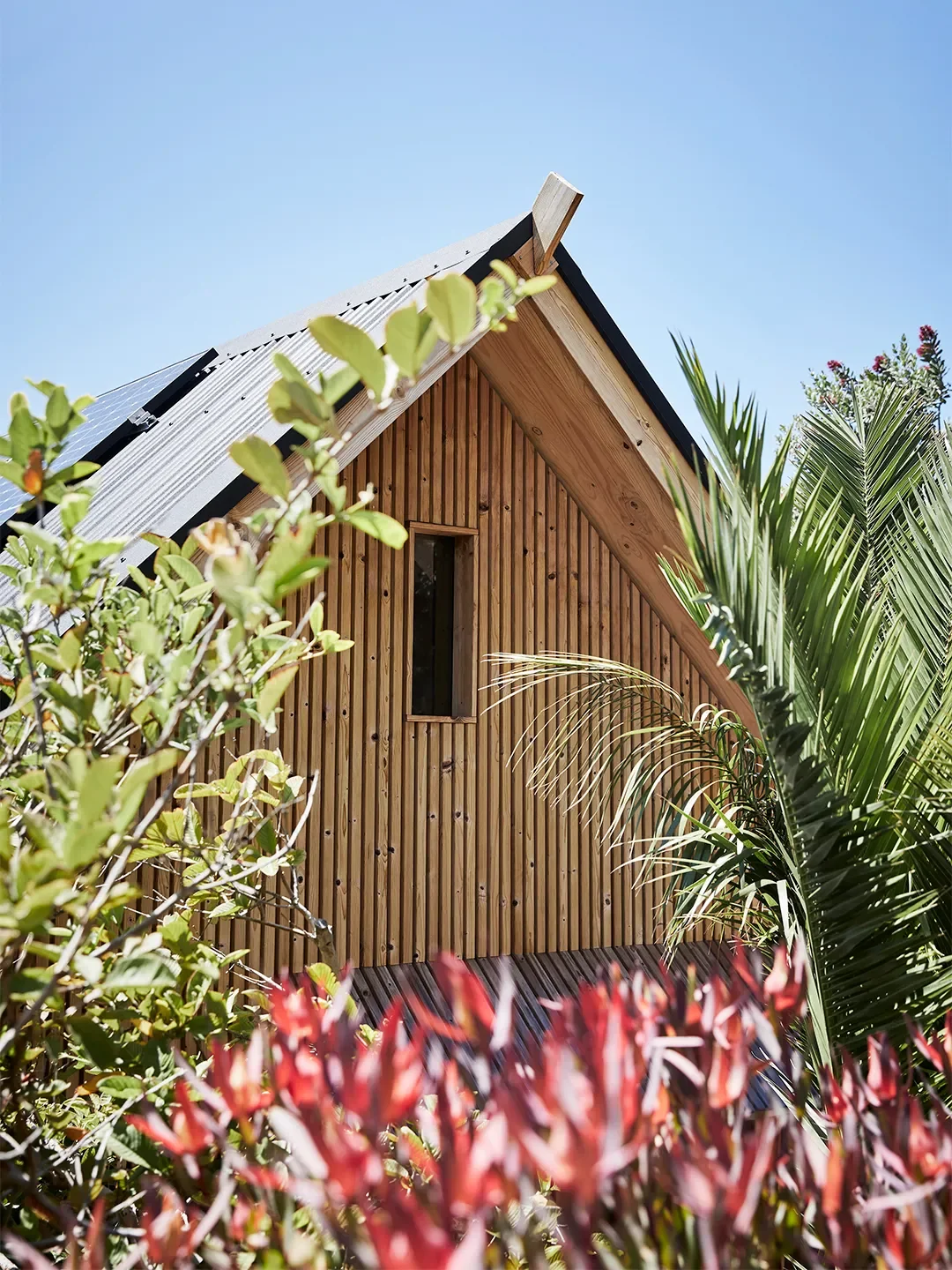
Instead of traditional brick and mortar, McGee turned to lightweight cross-laminated timber (CLT), which offers amazing sound and thermal insulation, generates almost no waste during construction, and needs only a small team to install. "Some view it as the building industry's only savior in achieving a near carbon-neutral footprint," shares McGee. Once he and his crew returned to his land to assemble it, it took less than three weeks. Three weeks, you guys!
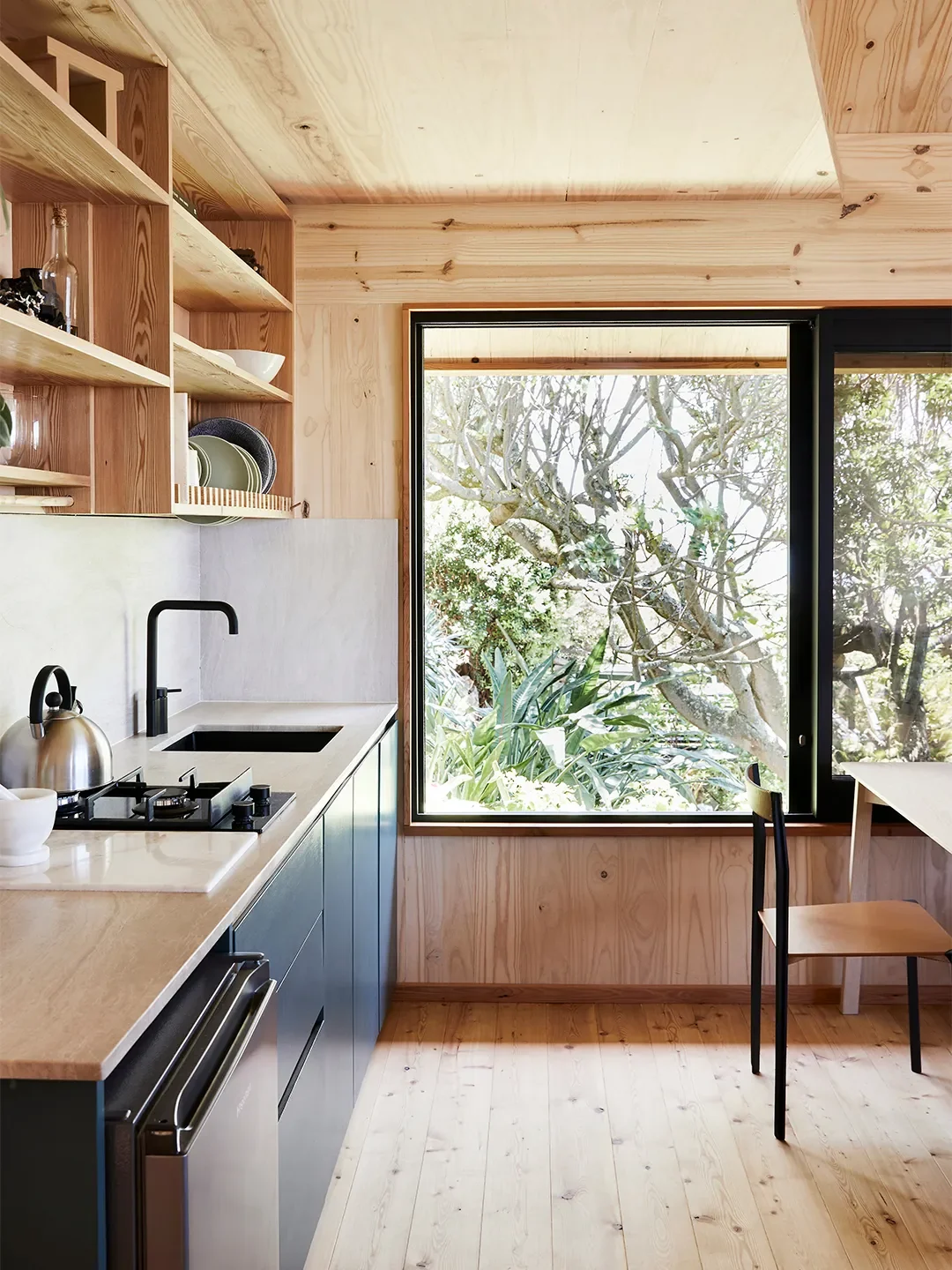
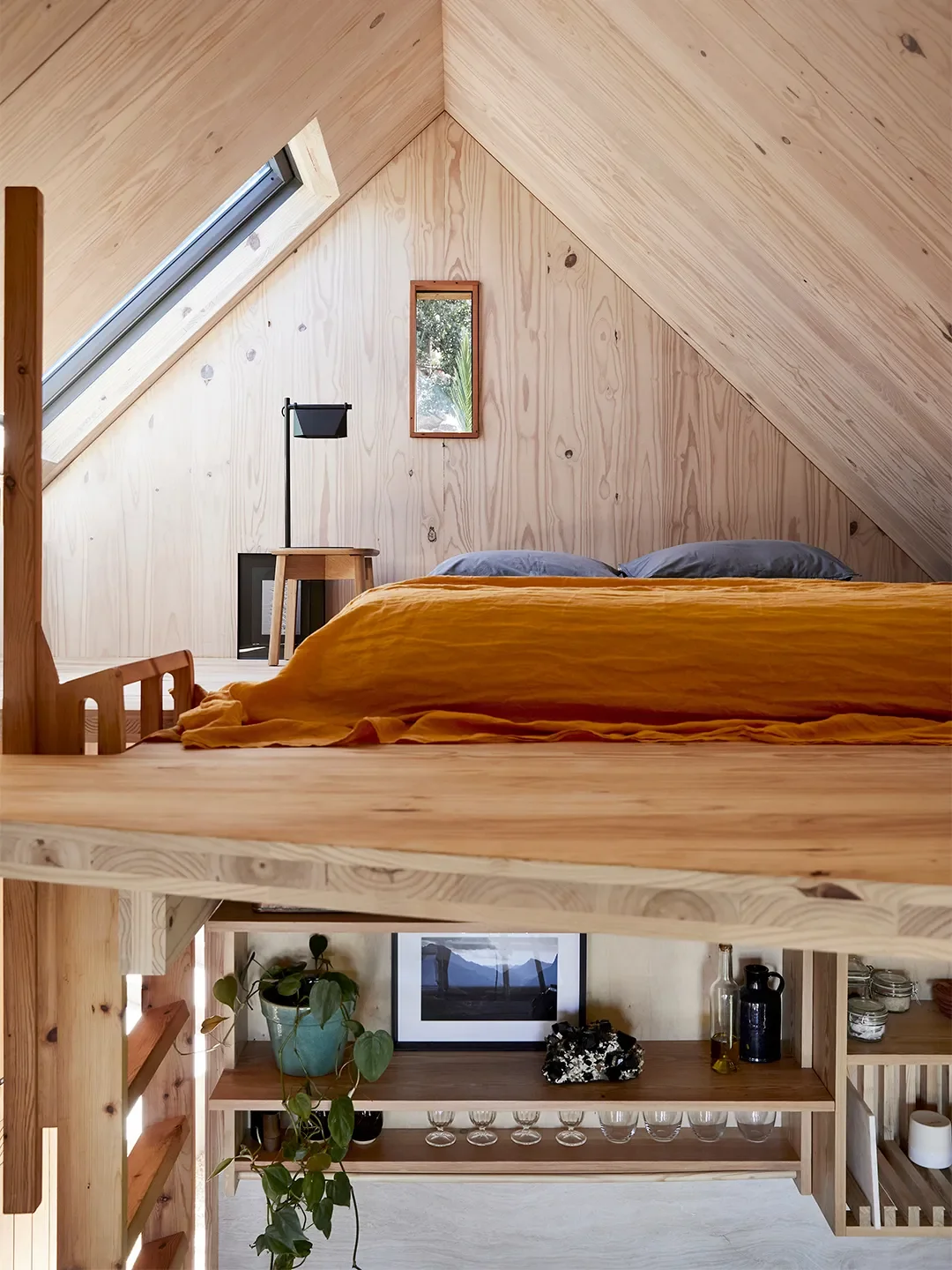
A 45-degree pitched roof with large eaves not only made the tiny cabin a closer match to McGee's main house—it created space for a standing mezzanine accessed by a retractable ladder. "Even though the bed does not have a base, the elevated nature of it makes you feel incredibly safe. It is almost nestlike," says McGee. While he'd imagined the space as a show home for Anima Homes, his business creating similar adaptable tiny homes, McGee and his family have barely been able to use it. Since listing it on Airbnb, it's been steadily booked. Not surprised, honestly.
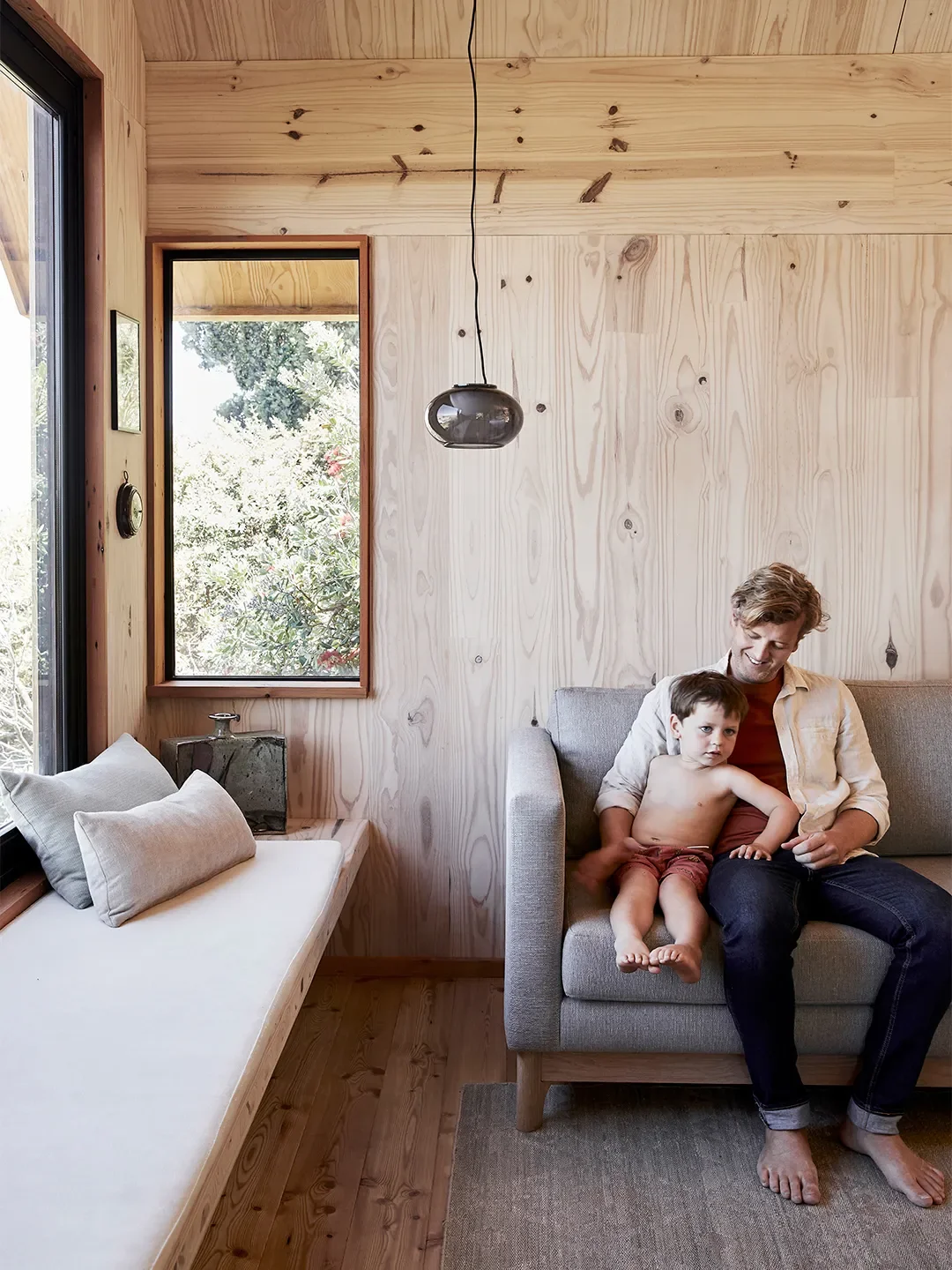
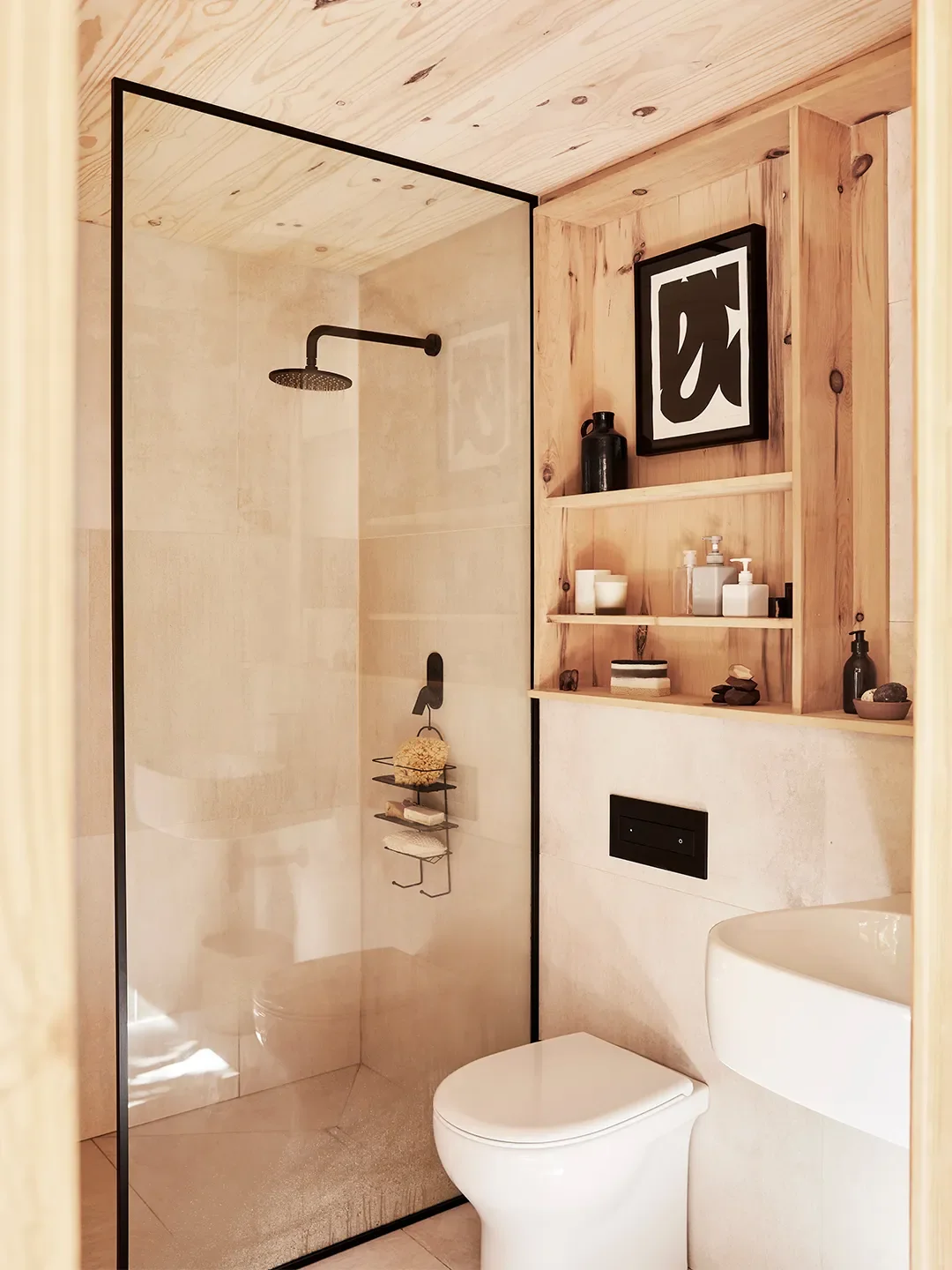
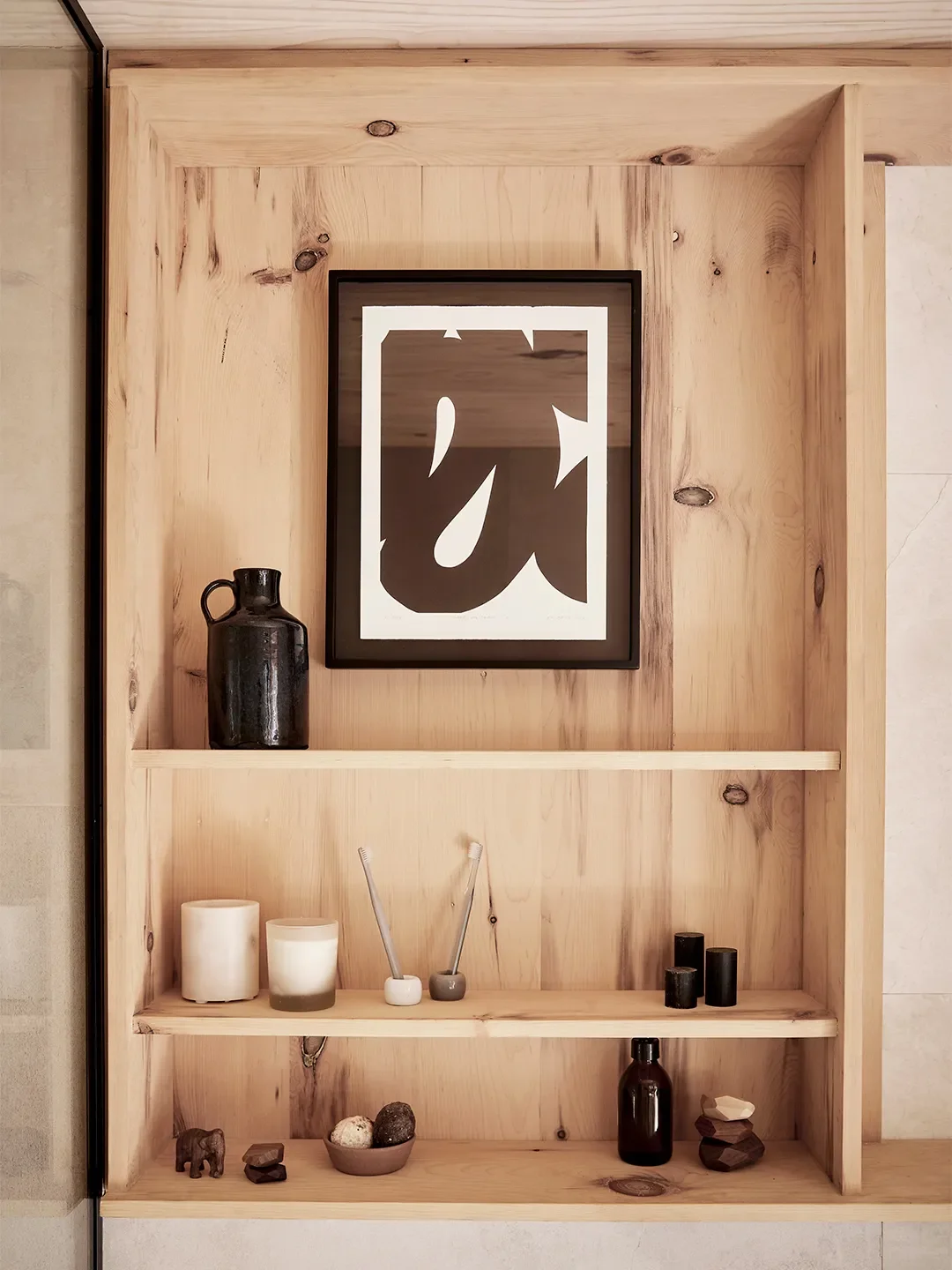
Luckily for guests, there's plenty of storage. Walk in and you're greeted by a Wawa wood surfboard handcrafted in Muizenberg, plus tons of hanging space for clothes. Behind the wardrobe are all the solar-power inverters and batteries that let the structure run off-grid. McGee prioritized salvaged materials wherever possible: the cedar bathroom shelving came from a scrap yard, the reclaimed travertine kitchen sink was a steal from a stonemason friend, and the window trim came from McGee's own house—remnants of old furniture. Sustainability goals.
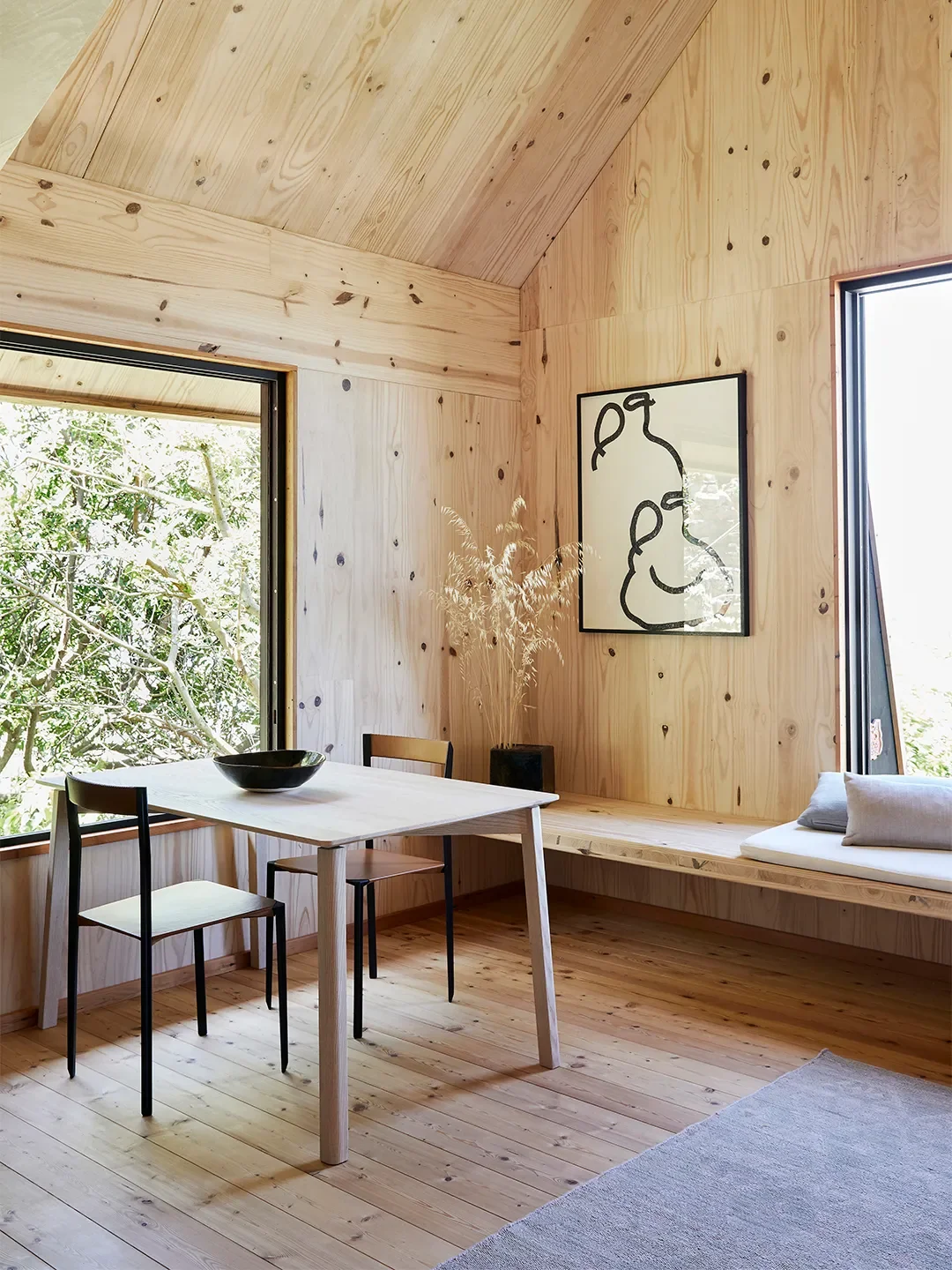
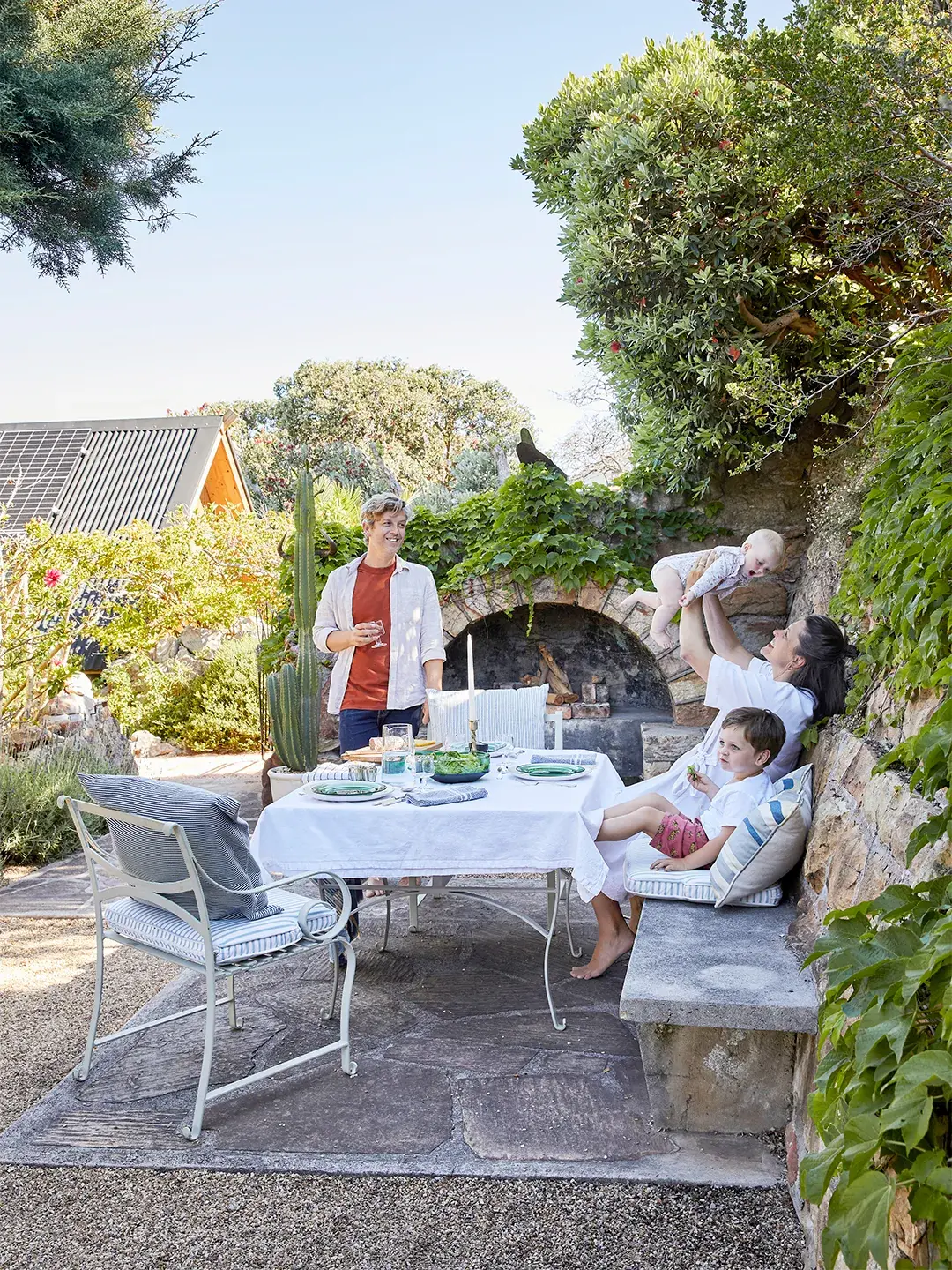
When McGee and his family aren't hosting Airbnb guests, they're patiently awaiting another kind of visitor: eagle-owls. "When I first moved here, there was a pair that nested in the palm trees adjacent to our property," he says. In an effort to create a welcoming habitat, he added built-in owl boxes to the exterior (plus bat roosts). "Sadly, the owls haven't come back yet," he admits, "but the door is always open for them." It's giving the sweetest energy.
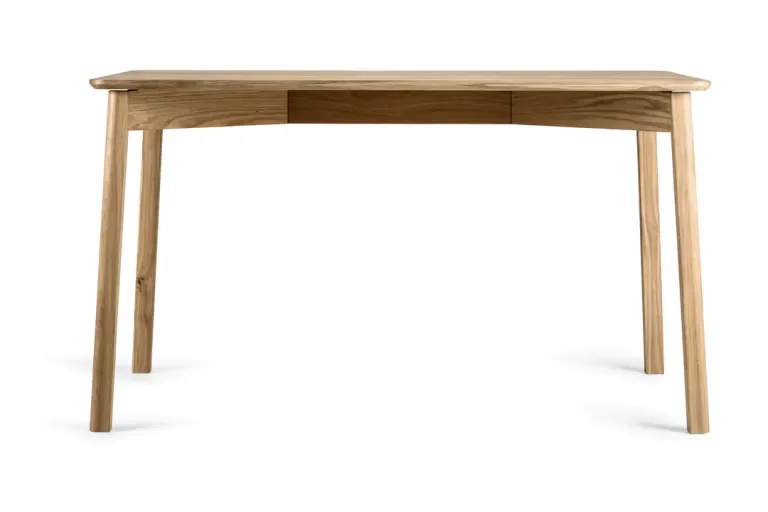
Basis Table, Hoop Furniture ($454)

A Certain Place II, Zarah Cassim ($547)
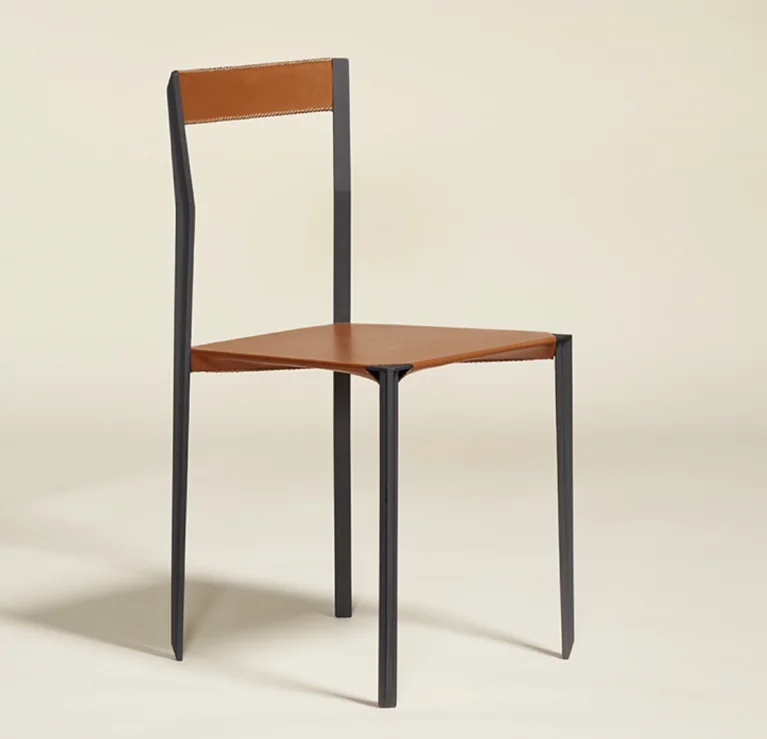
MŪ191 Chair, Muvek (price upon request)
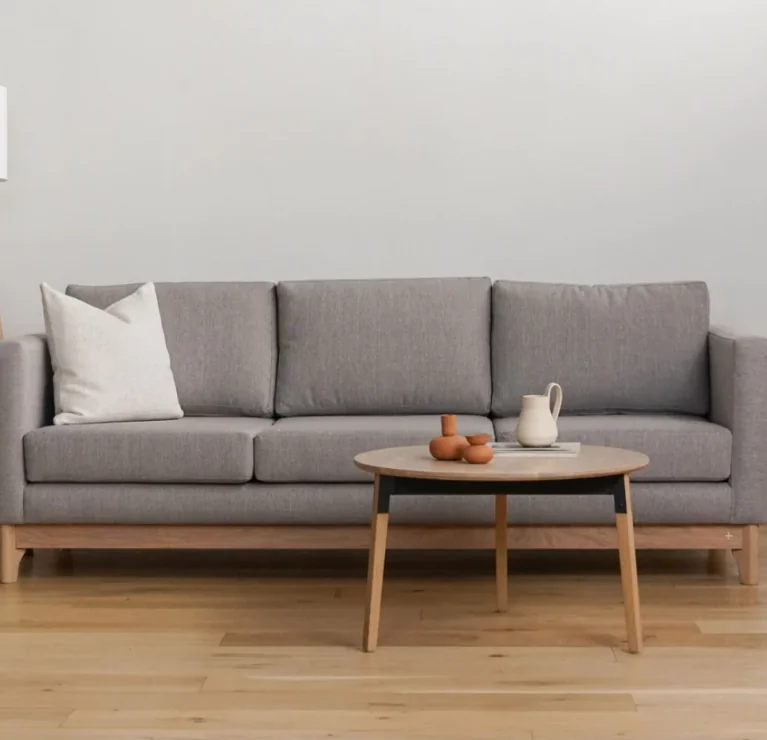
Escarpment Couch, Pedersen + Lennard ($2,112)rn

Lydia Geisel has been on the editorial team at Domino since 2017. Today, she writes and edits home and renovation stories, including house tours, before and afters, and DIYs, and leads our design news coverage. She lives in New York City.
Learn more about Domino.comEditorial Standards