I Recycled 400 Pounds of Food Scraps in a Year Thanks to This Chic Appliance
BySamantha Weiss-Hills,Photography byBelle Morizio
PublishedJan 9, 2026 11:21 AM EST
We may earn revenue from the products available on this page and participate in affiliate programs.
Domino Shopping: Worth-It Deals, Editor Picks, and Gift Guides
Join us for a weekly shopping trip right in your inbox.
By signing up, you confirm you are 16+, will receive newsletters and promotional content and agree to ourTerms of Useand acknowledge the data practices in ourPrivacy Policy. You may unsubscribe at any time.
You guys, the kitchen appliance lineup in our one-bedroom apartment is tight, but we make it work for the essentials: a Breville espresso machine, a Japanese toaster oven, a blender, and a motion-detecting trash can. But a year ago, we wanted to squeeze in one more that we hoped would solve a problem we just couldn't shake: in such a tiny space, where on earth do we store our compost?
After a few years on the market, it was clear that Mill's Food Recycler was a total game-changer—and not just for the tech. Honestly, as people who love to cook and host, we generate so many leftovers. Onion butts, garlic skins, kale stems, apple cores—we try our best to repurpose waste, but sometimes there’s just no saving the squash gunk or citrus pith. Our past compost attempts ranged from an outdoor tumbler to a sad little countertop container to biodegradable bags crammed in the freezer willy-nilly. We needed an actual fix that was neat, easy to maintain, didn’t smell, and—crucially—wasn’t an eyesore.
When I got the chance to bring the Mill home, I committed to a full year of testing—because I wanted to know this appliance’s pros, quirks, and surprises inside and out. Let me tell you everything I learned.
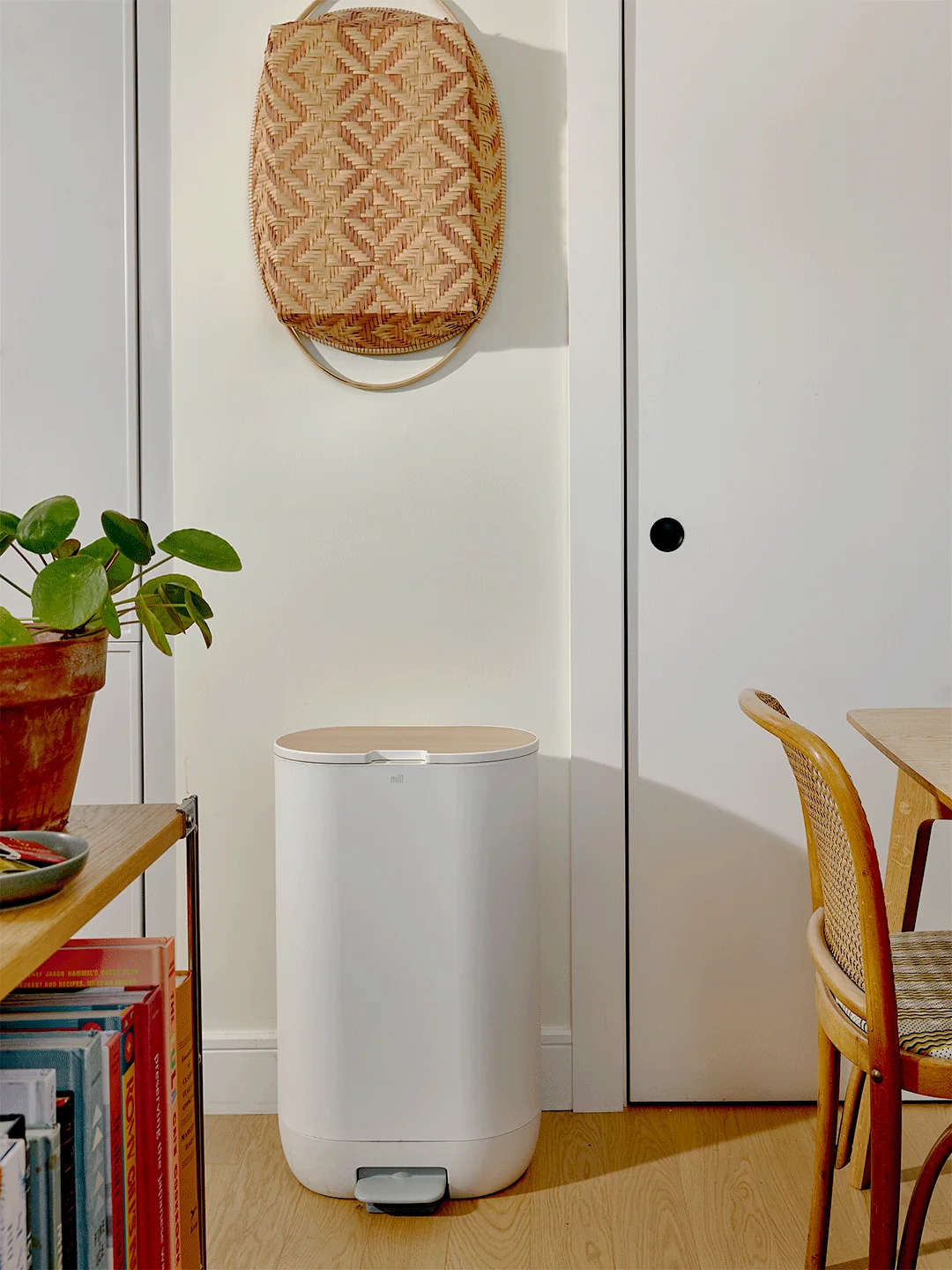
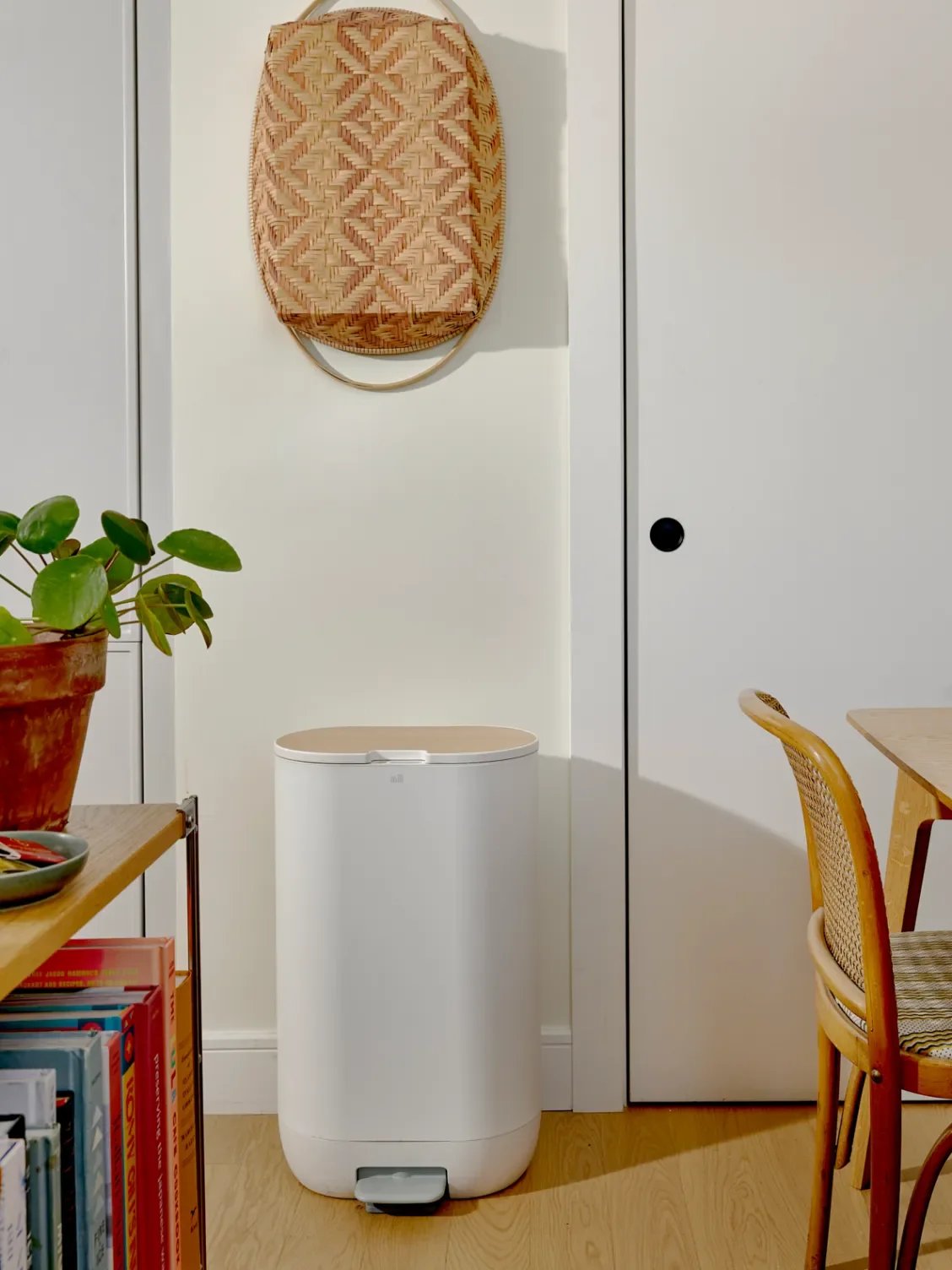
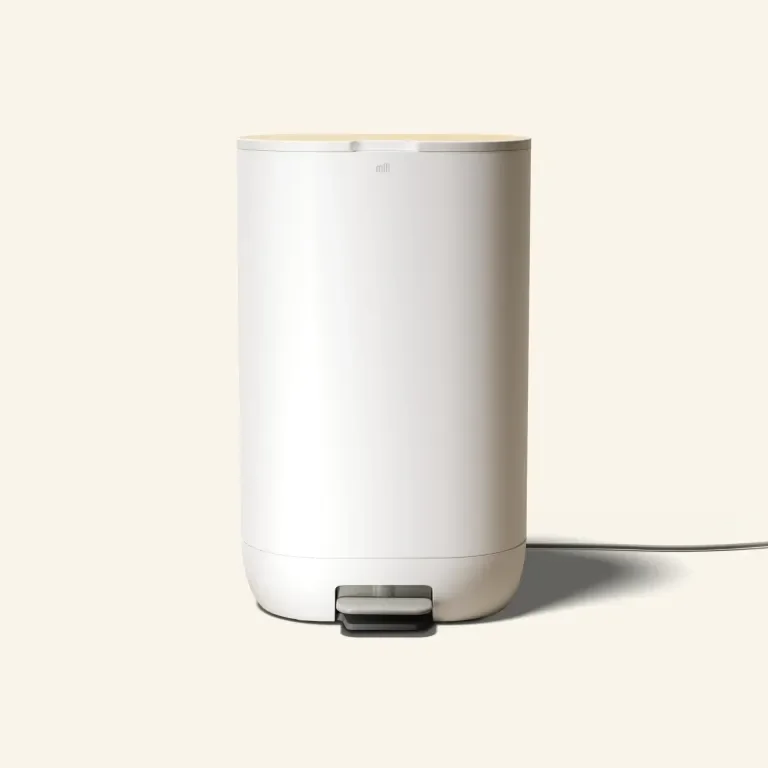
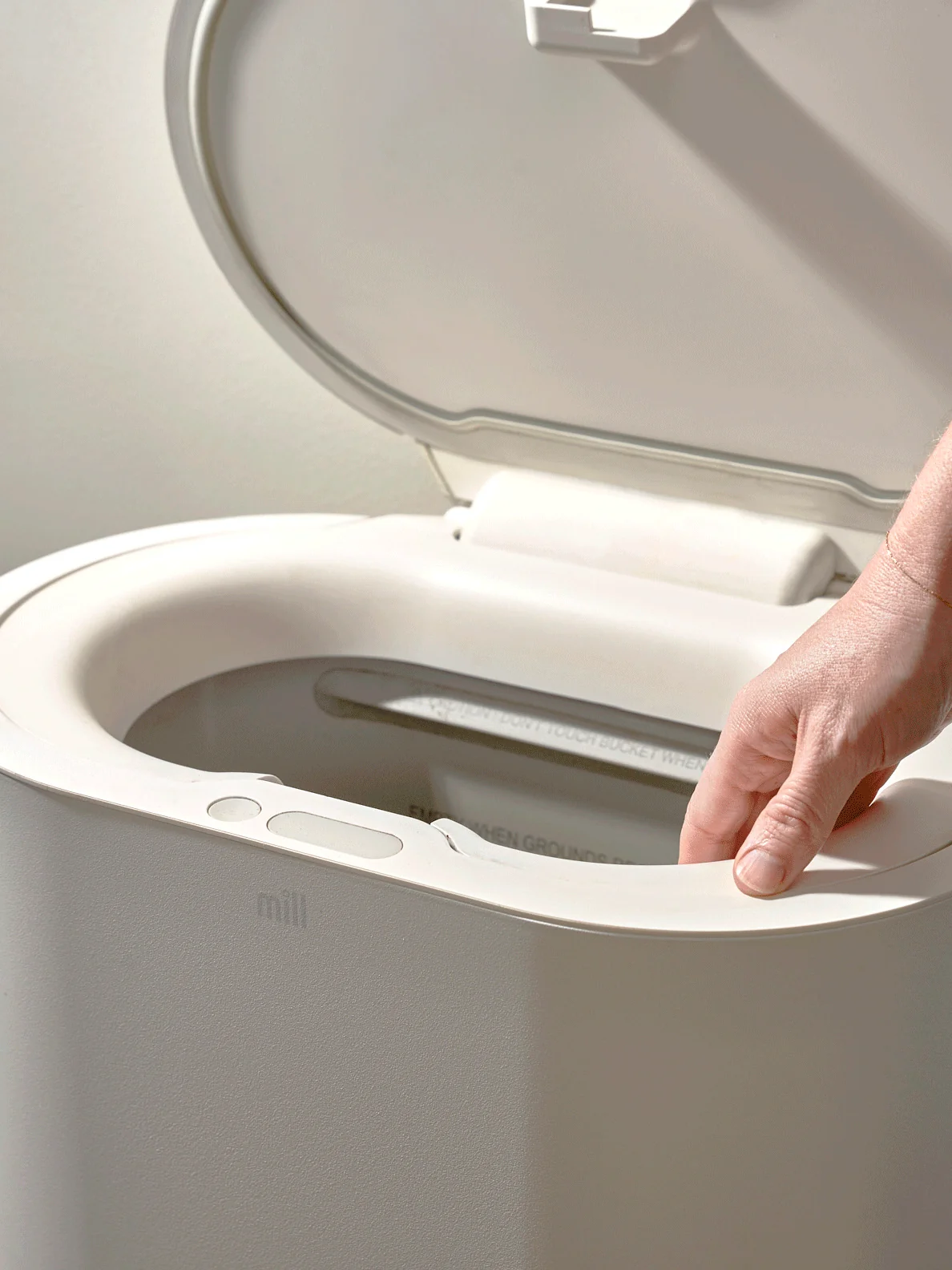
I can’t even pretend the Mill’s gorgeous aesthetic isn’t the first thing that grabbed me—and honestly, I know I’m not alone. You can feel the intention behind every clean line, rounded edge, and that soft gray pedal. (Makes sense—the engineers behind it also worked on the iPhone and Nest thermostat.) I have the matte white version, but the brand dropped two new colors, stainless steel and black, in fall 2025.
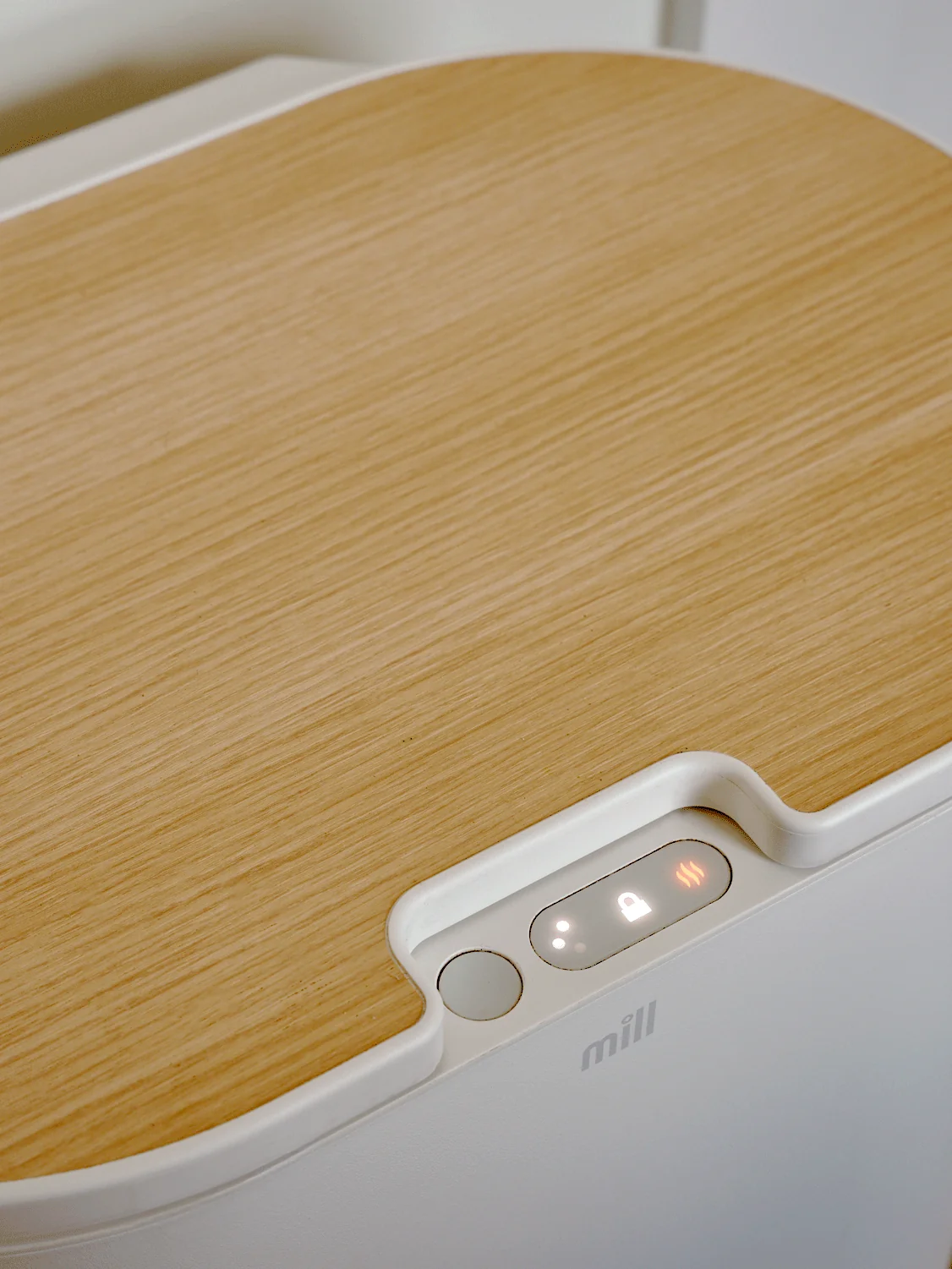
The LED display is so simple and intuitive—just three icons you can read at a glance. Even the Kelly green accents on the interior metal bucket are considered; it’s the same hue as the logo. Basically, it walks and talks like a much prettier trash can.
Setting up the Mill is literally plug-and-play. It’s designed to live in your kitchen like a tall trash can and is ready to roll after just a few quick steps. All you do is plug it in, download the app and pair it, set the scale, and pick a few settings before you start tossing in scraps. Even the removable carbon filter (the one that keeps smells at bay) comes pre-installed. Just take it out, remove the packaging, and you’re golden.
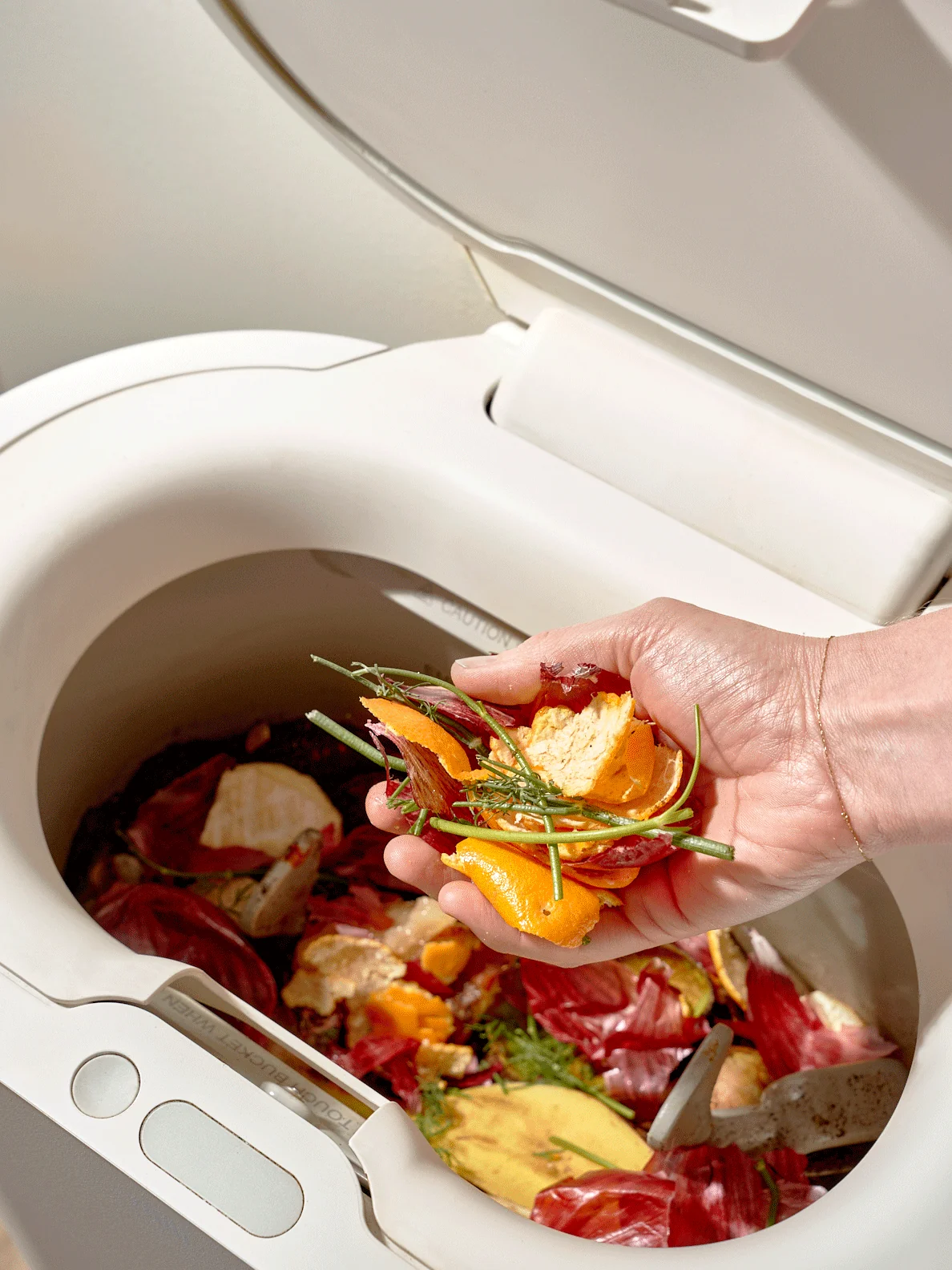
The metal bucket holds up to 12 pounds of food. Instead of tossing scraps in the trash, you simply divert them into the Mill. The action feels exactly the same: step on the pedal, toss in an orange peel. Easy.
One part of the app I’m obsessed with? The library. It’s a little pocket guide to what can and can’t go in the bin. Surprising items that can go in: baby formula, boba, pet food, cold cuts, sushi, and chicken bones. Flowers are even fine if your food grounds are headed to a personal or curbside compost bin—but not if you’re feeding the grounds to chickens (they can be toxic to the animals).
On the downside, your compostable packaging and tableware can’t go in. And you’ll want to keep items high in sugar and liquids to a minimum. The latter can stretch out the cycle time (using more energy) and also gunk up the system.
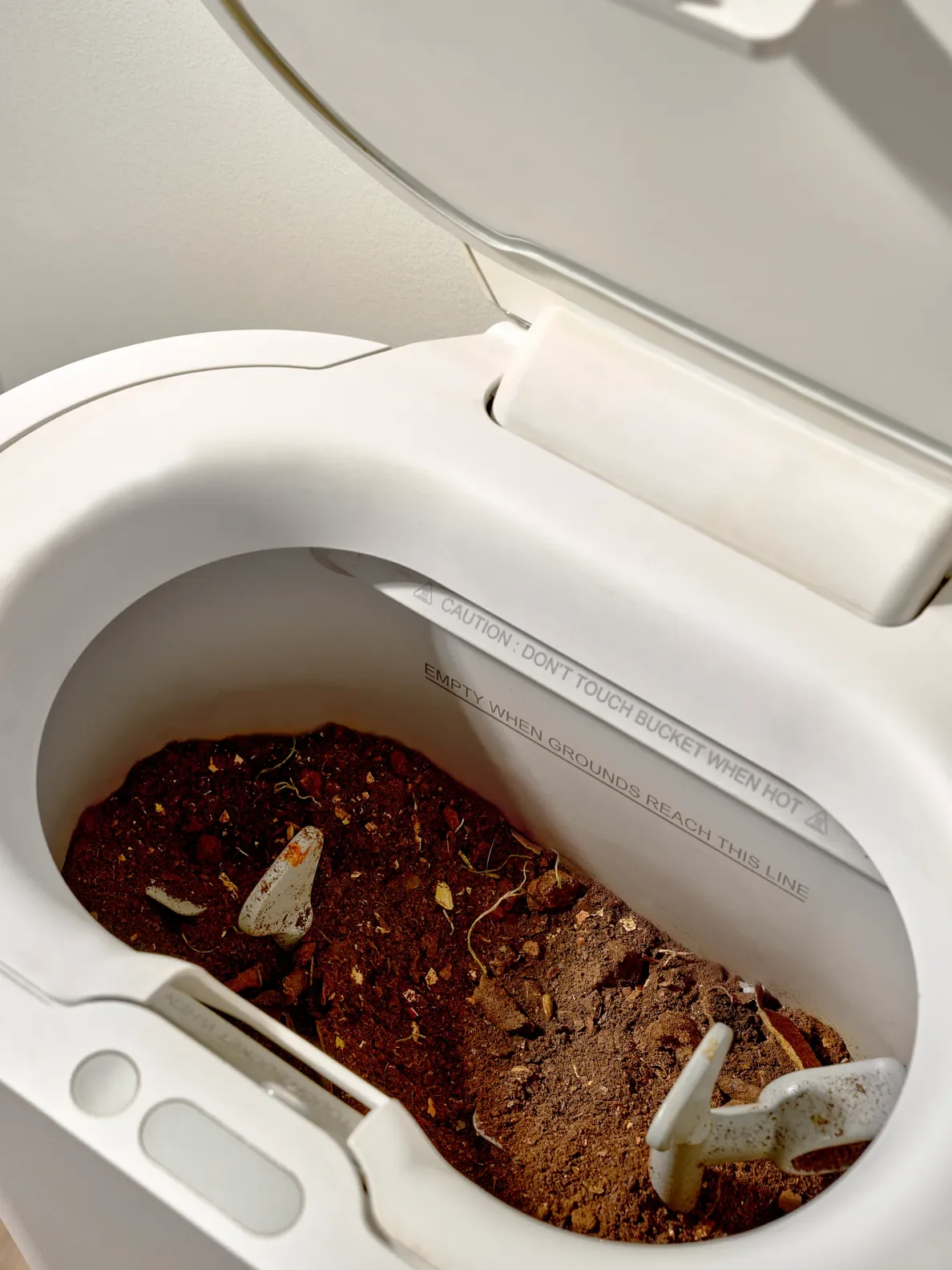
We let our Mill run on a set schedule every night even if it’s not full; that way, it keeps breaking down what’s inside while we add more scraps. (If you’ve got a ton of extra waste outside the cycle, you can tap a button on the app or bin to start an extra one.) Two solid metal augers churn and heat contents to 212 degrees Fahrenheit—this ensures germ-free, shelf-stable grounds. PSA: the brand likes to remind you it’s not creating compost, per se. It turns scraps into what they call food grounds—essentially dehydrated crumbs. These can supercharge your garden soil; go into curbside or backyard compost bins; feed backyard chickens; or get sent to a processing facility via free, pre-paid cardboard boxes you can request.
Our grind cycle starts at 10 p.m. every day, and while we skip the lock button (sometimes I sneak in a banana peel or two while it’s running), you can use it if you have curious kids or pets. The cycle can be long—sometimes after a dinner party or a particularly extra meal, it’s still going when we wake up.
You might be wondering, doesn’t that use tons of energy, and isn’t it pricey? I asked one of the founders, Harry Tannenbaum, the same thing. He assured me it’s less than you’d think. Because a kilowatt hour (kWh) is how utilities measure energy output, that’s how the app tracks the Mill’s usage (approximately .7 kWh per day). Our lowest monthly usage, around 11.5 kWh, is roughly the same as running a dishwasher eight times. On the high end, our peak was 32.1 kWh, or 22.5 dishwasher cycles. In New York City, that translates to $3 to $8 a month.
Now that our trash can isn’t full of rotting food scraps, it genuinely doesn’t smell. And overall, the tight-close lid and carbon filter on the Mill have completely masked any odors from our bin. Every once in a while, when there’s a hefty load processing, the apartment smells like brownies (it’s heating and churning, after all). Not the worst thing, but slightly confusing when the oven isn’t on and I’m definitely not baking.
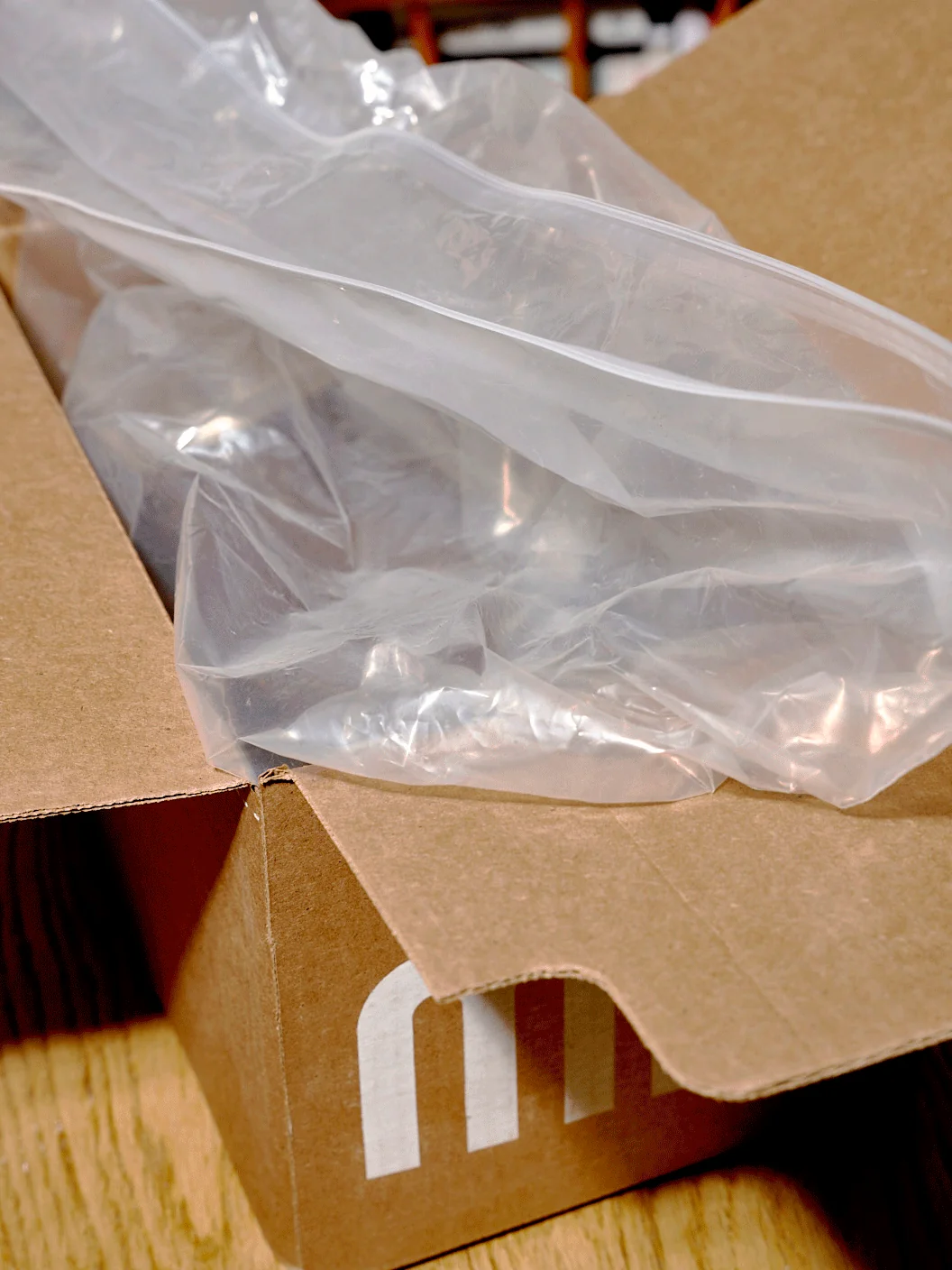
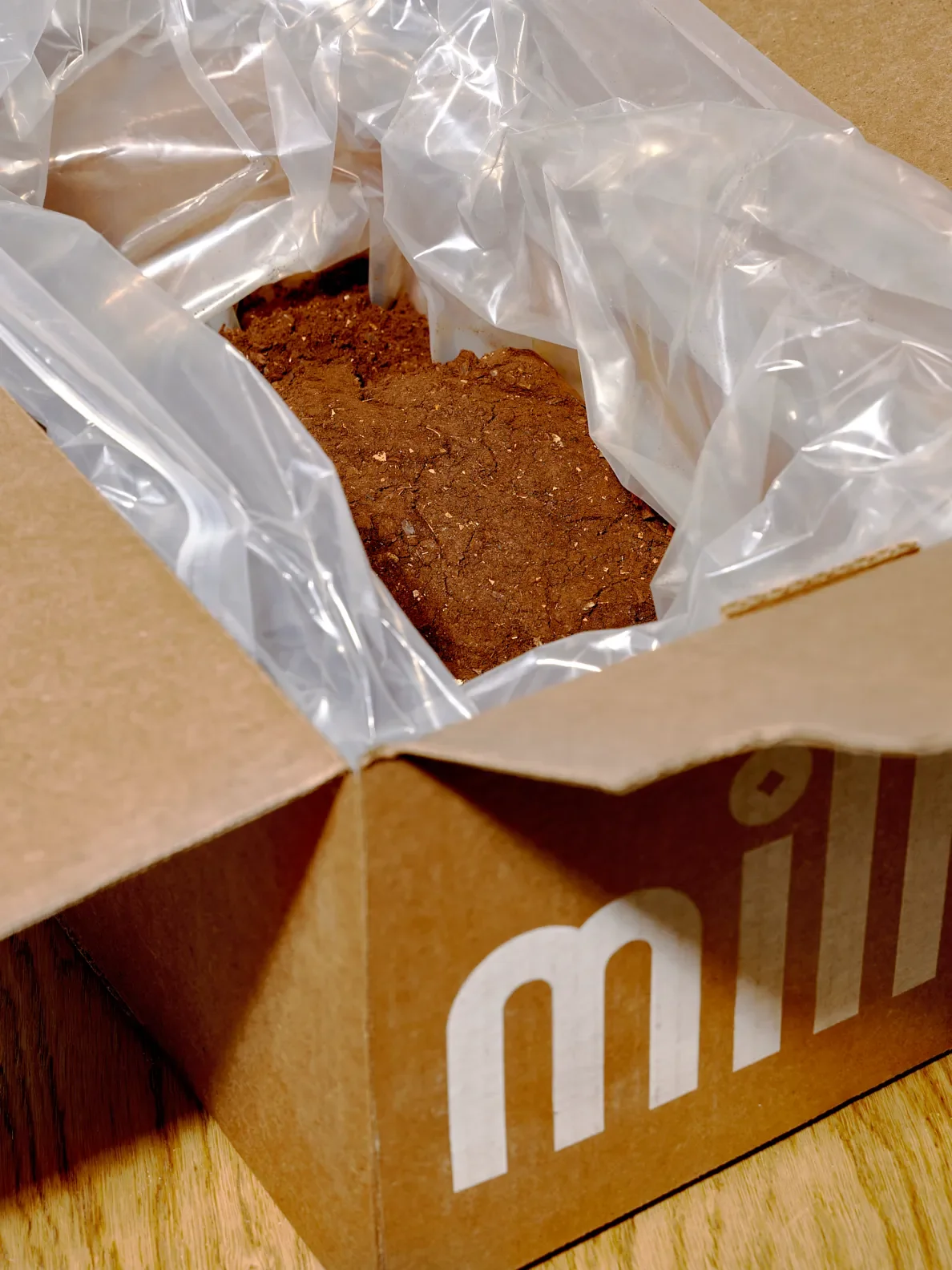
Over the course of a full year with the Mill—and I cook a lot, just saying—we’ve only needed to pack and send back five boxes of food grounds. And yet, by our bin’s estimate, we’ve diverted more than 400 pounds of food scraps from landfills. That’s the real genius of this device—the overnight cycle turns a whole bucket of ripe scraps into a tiny volume of dehydrated grounds. Unlike our old countertop compost bin that needed emptying every few days, we only empty the Mill about once a month.
This is good because the bucket is not lightweight, especially when it’s full of food grounds. And those 13” x 8.25” x 7.5” cardboard boxes do take up room once assembled.
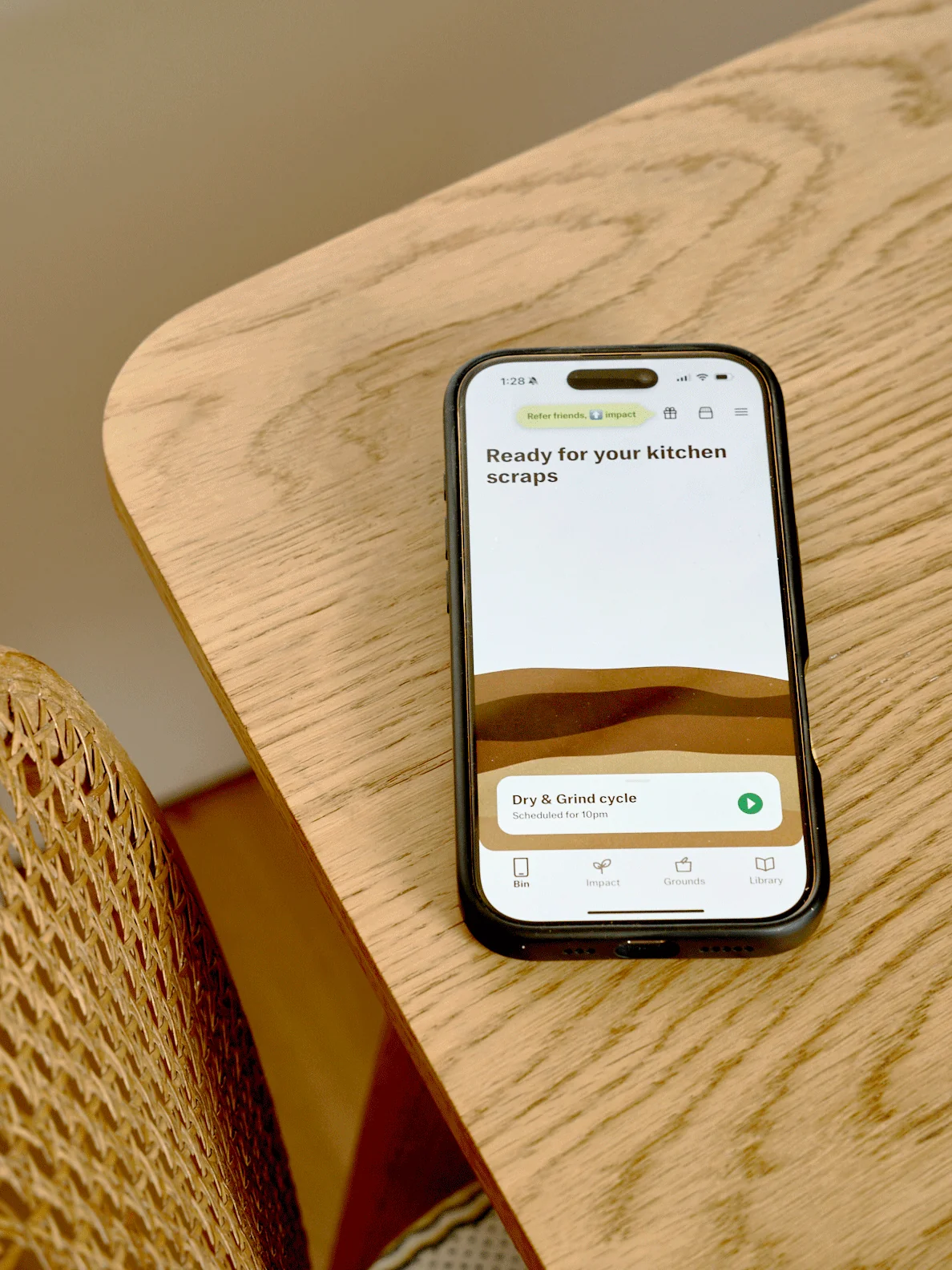
The Mill app is packed with data, logistics (did my box make it?!), and tips on using your results. Because we send our scraps to Mill’s local farm partners that turn them into feed, we can see we’ve provided a month’s food supply to more than 40 chickens. You can order extra boxes at no cost, and new filters are available in-app, too.
Things get a little grimy over time, so it’s smart to give the interior a wipe-down here and there. While a regular all-purpose cleaner handles fresh splatters on the exterior just fine, I found that a Magic Eraser is my go-to for more caked-on stains on interior surfaces. Mill recommends swapping the carbon filter annually, although I haven’t done that yet and haven’t been bothered by any unwelcome aromas.
I’m not going to sugar-coat this: the Mill Food Recycler is $999, and you can rent one for $30–$35 per month. That’s way more than a countertop compost bin, but there’s a lot more going on under the lid. (And the brand does host sales here and there, if that helps.)
If you have a backyard or live somewhere with great city composting, and you genuinely enjoy the process, the Mill Food Recycler is probably not worth the splurge. Grab a countertop bin and some compostable bags and handle your scraps the old-school way.
But if you’ve tried that and can’t deal with the mess, smell, time, and energy of composting, this might be your perfect solution. Same goes for anyone who cooks regularly, is passionate about cutting food waste, and doesn’t have access to a regular composting system. Then I’m telling you—run, don’t walk. The design-forward look, getting instant data on my impact, and being able to ditch my scraps right away instead of holding them for a weekend drop-off are all game-changers. Making room for this in our small kitchen was a no-brainer.

Samantha Weiss-Hills is the managing editor for Domino. She edits and writes home tours and features, and she’s the friend who everyone texts for glassware, sofa, and sheet recommendations. She lives in Brooklyn with her husband, Alex, and their beagle-corgi, Elsa.

Belle is the in-house photographer and associate photo editor for Domino, capturing everything from home tours to gift guides, plus the occasional how-to project. She joined the photo team as an intern in 2018 and was brought on full time in January 2021.
Learn more about Domino.comEditorial Standards
